Saturday, December 6, 2014

Bob-His Name Is NOT Bob!


Bob, not really his name, taught me a lesson this week. It was only 3 seconds long, and I might have missed it if my eyes were not exactly on him at that moment. I was sitting at my desk, with a Google document. Students were doing a low tech activity. On the Google document, displayed on my smart board, was a single sentence. They were going to try to paraphrase it. This was a huge challenge for these 7th and 8th graders who really did not have any idea of how to "put it in your own words". Once realizing their overall lack of experience leading to their overall lack of ability, I designed a very traditional short lesson on paraphrasing. I went over the process and procedures with them. Then, with only one sentence to do, I gave them a post it note. They would try to paraphrase it. One single sentence seemed very doable to them. That was my intent. Then they would read their sentence aloud and I'd type it into the Google document for all to see. Finally, after all the typing of each of their sentences,  we'd go through each one and discuss it. Did they stay true to the original information in the sentence as written by the author? Did they miss a big idea? Did they use words that diverted from the original intent? I went around the room asking kids pointed questions. The concept of the evaluation was meant not to embarrass but instead to highlight the good and maybe not so good in each. We found something good in each one!

A little background info on Bob. Bob is extremely intelligent. Bob has social issues and huge attention issues. Bob is very likable but also very immature. Bob does not have friends. Bob has copied and pasted much of his 'work' in the past. So, now we are on Bob's sentence. He actually did a relatively good job. He could have changed a couple of words instead of using the original words, but did change one or two others and held true to the meaning the author intended. I highlighted the positives and then told him he could have changed this word or that one and we discussed what words he could have used. Then I said, "All in all you did a pretty good job!" Then I saw it. It was quick, but I did capture it in my mind's eye. Bob, looked up to the ceiling, maybe the sky, maybe heaven.....and raised both his hands in fists in the air. With a smile on his face he said, "Thank you...." but I didn't hear who those words were meant for. I have my suspicions.

It reminds me that Bob probably hears more negatives than positives throughout his day. I know that is something I have to work on more with him. I know I must give that feedback, but it must be genuine and not false or fake accolades. Bob is too smart for that one and it would water down all positives if I did that. I know that I have to work at 'catching him when he's doing good things' and that will make more of those magical good things. I know I have to work harder to reach him. He is a jewel who just needs some more polish. I have to work harder to make him shine more like what he did this week with his hands in the air and his eyes looking up, Bob reminded me ......

Tuesday, December 2, 2014

Christa McAuliffe Conference-Wow, my presentation was a hit!!!

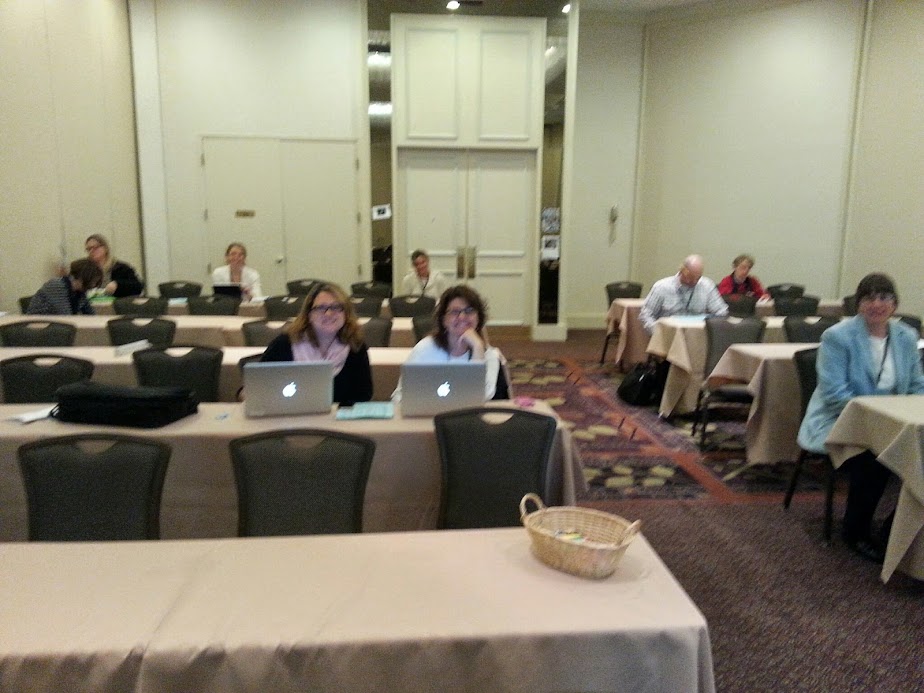
Awesome time today.....at Christa McAuliffe Technology Conference. Thanks to all who attended my conference. I am glad that you all came and found some good ideas! Here is my presentation link:

My Christa McAuliffe 2014 Conference Presentation


Thursday, November 20, 2014

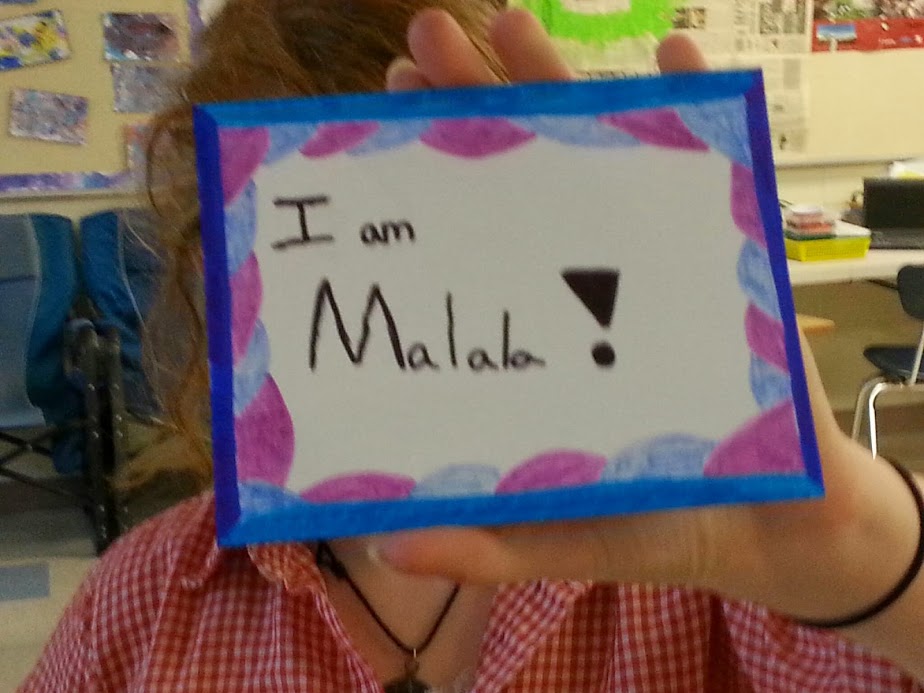
Who Is Malala-The story that continues to Continue.....

I first exposed my students to Malala Yousafzai's story with a packet I created from a few articles from the web, interspersed with questions I created. I added images, as I always do and some important background information they desperately needed. Also, an article on the Taliban, to describe the terrorist group who was responsible for the attack on her. A prior knowledge question proved that not one of my 28 students knew who Malala was. None knew about the Nobel Peace Prize. Only one had heard of the Taliban.

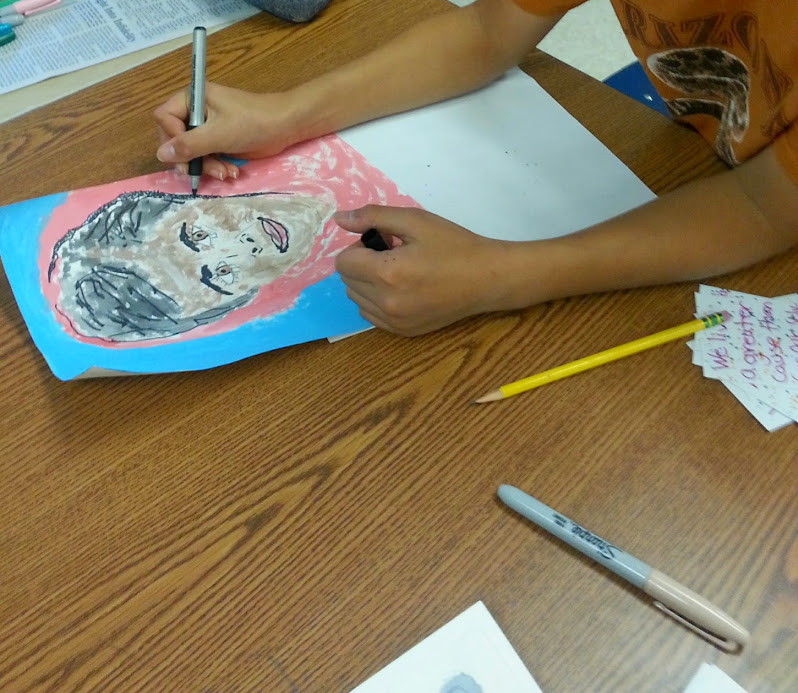
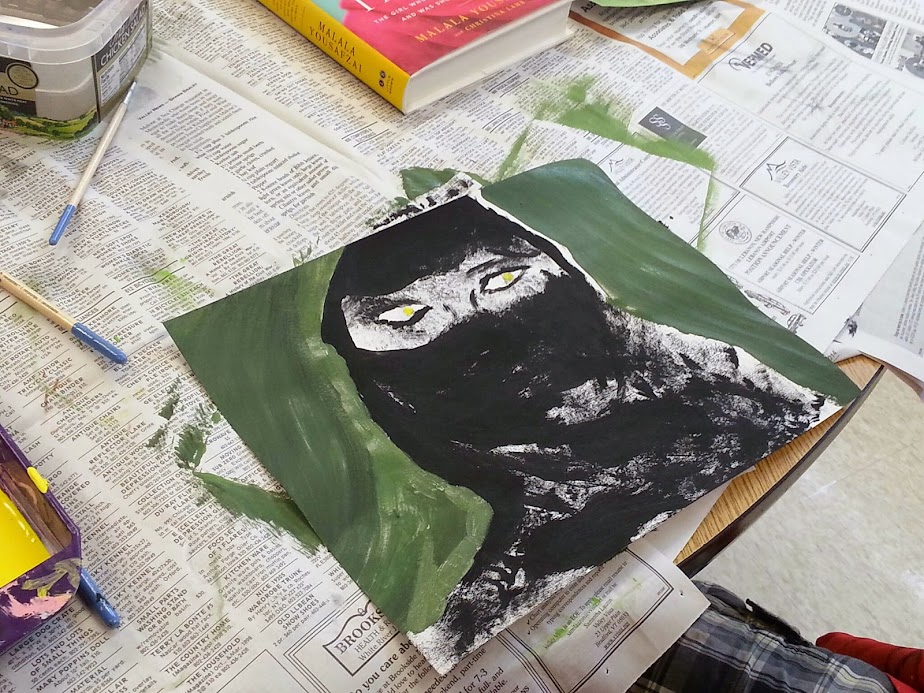
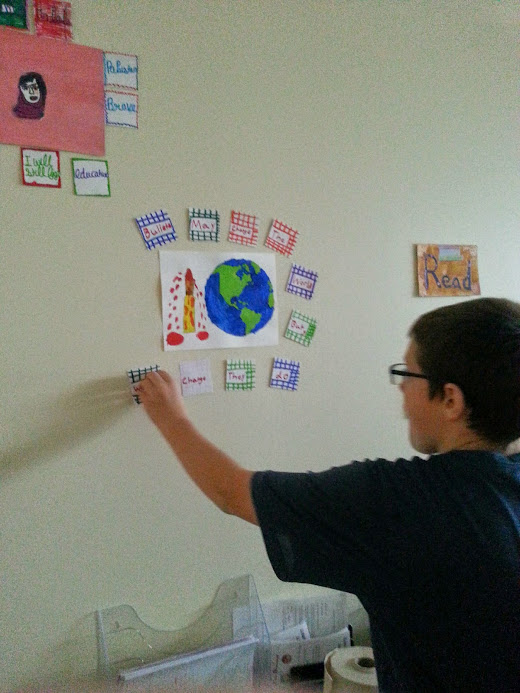
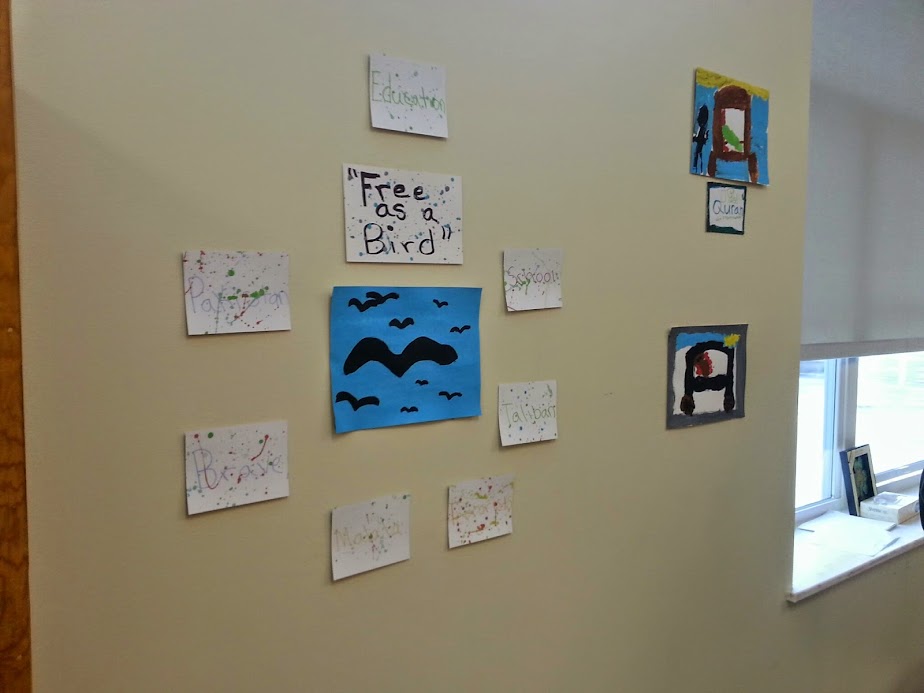
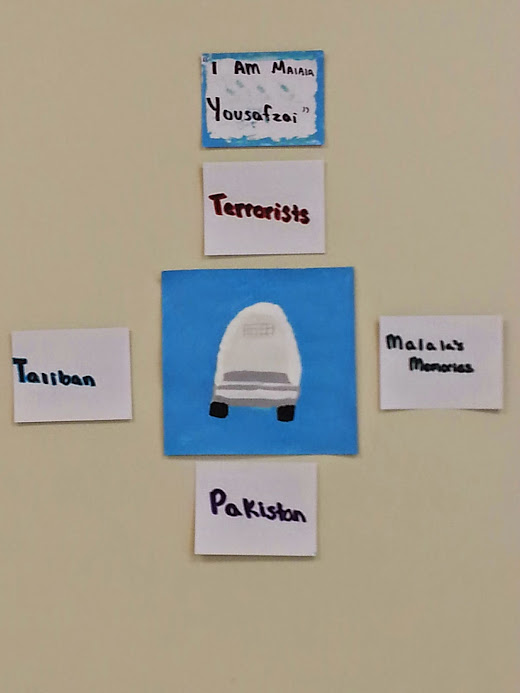
I was shocked, as I always am, that with so much information about this topic in our news daily, and their instruction in social studies classes, that they were clueless. Thus began what I believed would be a 4 day assignment at best....which turned into several weeks now. We read and answered questions. We created notes. We watched the ABC 20/20 Diane Sawyer special-Who Is Malala, and continued to develop notes. We organized those notes using graphic organizers in preparation for writing a 5 paragraph essay. We completed an 'Art Connected To Text" assignment where students would take a Big Idea and present it in an artistic form adding in Big Idea words. Finally, we are in the midst of the Persuasive/Argumentative essay. The essay is tedious at best. None have ever done such an assignment. They all want to dive into the story as a summary. This has been quite the challenge and I've modified the Painted Essay to be a 5 paragraph essay model, shifting some of the colors and maybe stirring some feathers also. This has been quite the adventure...and we are not even close to being done....but we are not stopping until we reach our destination...

My students keep saying, "This is hard!!" and I reply, "Yes it is, but we are getting there." Sometimes I am not sure....other times I am charged up and believing...'I think they can...I think they can....."


Their artistic representations floor me...I love them and each of them spoke volumes not with their voices but with their art...

Thursday, October 23, 2014

What Are We Doing?

Designing instruction daily can be exhausting. I am constantly searching the web and finding pertinent stories, video clips, news articles, infographics, opinion pieces and images to develop my unique lessons. Common core programming is clear, and we must develop students' thinking skills, collaboration skills, and improve their ability to read deeply and with analysis. How do you do this effectively with students who never choose reading in their free time? You build their skills, which are not grade level to begin with, without it seeming like a chore. Common core tells us, without question, this is what is to be taught at each grade level. How we accomplish that is our task. Some teachers teach the same novels, poems, and short stories for 20+ years. That is not what we should be doing. I never do the same exact lessons more than one time. Each year, the news changes, my knowledge grows and I develop more personally and professionally. My class design and structure is my own creation. My current graduate class is following what I do and how I do it. My presentations at Christa McAuliffe conferences for 4 years in a row draw educators from around the state to me to learn how to design instruction like I do. My passion is to create dynamic relevant and topical lessons. Every year my pallet is new, as the world is new and opportunities to read expands. Whether it's reading a novel or a web page, reading is a skill that can define us and determine our futures and that is why my instructional design grows, breathes, and is alive...

Thursday, January 2, 2014

It's so Cold Outside...

It's so cold outside and the snow makes it even more chilling. Now back from our dog walk, dog boots off, dog jacket taken off, too, we settle back into the warm living room. I am watching The Waltons, where some of the residents are stressing over World War II,and the new German citizens on Walton's Mountains. Fear has always with been us in various forms. What people do with their fears can ignite a war, cause some to flee, cause others to hide.

Some of the best instruction and skills we can offer students is various coping mechanisms. So many students today lack these basic coping skills. When I was in junior high school, I had to walk a mile to school. There were no cell phones and there were no houses of safety. I walked by myself daily to school with a heavy book bag. I had to develop and strengthen my personal coping mechanisms and deal with my fears. There were many incidents with cars, and loose animals, however I was on my own. There were no cell phones. There was no way to call for help or have anyone to assist me. I had to cope on my own and figure out an alternate route or a way to keep moving without being attacked by a loose growling dog.

Many students, the same age as I was are lacking these coping mechanisms. They quickly turn to their parents for help. They text when they can't talk. They have an endless umbilical cord from which they use to help them cope with this or that. By reaching out to parents constantly, they are not developing their own coping mechanisms and their own problem solving skills, which we all know are absolutely vital to develop when we are young and fine tune with each subsequent year.

Fears can override the best of us. Fears of the German invasion during World War 11, the Japanese invasion, the Cuban Missiles Crisis, the race wars and race riots, Vietnam and other devastating effects all residual effects based on fear. Today's fears are based on economics, health, terrorism....but all fears are the same and they can paralyze us or force us to make decisions based on those fears. We need to help students develop some basic problem solving skills and exercise their coping mechanism muscle. We need to encourage deep thinking and thinking of alternative responses. These skills may not be specifically considered Common Core, but the integrated deep thinking and problem solving are. Why not create some activities where we challenge students asking how they would cope with this or that, if their cell phone service and all cell phone service went down for days at a time. That would put them on equal footing with those of us who grew up without this digital umbilical cord.


Monday, December 30, 2013

Creativity 3.0

I've been thinking a great deal about creativity. How do you inspire creativity? How do you find it yourself? How do you teach in creative ways, allowing others to stumble upon their own creative venues. For years I've lacked hands on creativity. I went from writing a book, yet unpublished, to then throwing myself back into the daily teaching grind and all that it encompasses. Creative teaching takes time. It consumes my thoughts. My creative teaching process never shuts down. All of my energies go to creating content, anticipating behaviors, managing behaviors, creating content that will reap the most success for the majority of my students. Oh, how it would all work better if they were all on board and knew the cost of their actions today. They will never have this intense structured reading and writing instruction again. High school, their next hurdle, will not provide them with this small group, catered instruction. They will not be able to ebb and flow getting this level of intense instruction designed just for them to improve their reading, and writing skills. They will not get another teacher who scans the news, finding the best and most relevant articles with topics that literate young people should know about, creating reading and writing activities for them to bust out of their reading and writing challenges. Some students don't regard this instruction as special and important. Perhaps years down the road they will find and discover what they once had and didn't embrace.

Can I make every student happy and creative in this learning environment we call school? No, and I am aware that the best that I can offer them is opportunity. I can offer them opportunity to improve, develop, learn, create, and embrace knowledge. I can offer them opportunity to use these 21st century tools of ipads, apps, smartboards, digital learning Haiku-LMS. I can offer them creative outlets and some choice in learning. I can offer them a path that they don't presently have in other parts of their daily educational experience. Of course I am trying to engage them, because only engaged and ready learners will be available to learn. Test scores are like shadows that they don't even realize are following them. Any school in the future will be looking closely at these new test scores. They will be scheduled into their high school classes, levels, by these test scores. They will have opportunities come and go based on these test scores, in this new era of testing. Unfortunately, there is little that I can do about that big picture of test, test, test. 

However, I bring to them my desire to help them learn. I create and use all my digital resources to make that happen. I teach then using digital images, videos, examples of writing, and engaging topics. I use art whenever I can to connect their learning. Creativity is never found in a closed box or a closed classroom. Creativity is unique to each of us. That two day activity of creating a visual image and key words connected to their novels produced the most dynamic and creative images. I love that they hung them all around my room and they stand there today, duct taped onto my walls for me to see everyday. 

Creativity, 3.0, that is my desire. Connecting learning, to creativity and engagement. Learning is not static. Learning should ebb and flow. It moves and it's quite alive. Learning is awesome and watching it happen is a grand gift that I get to see and feel everyday.